
Play is not just fun—it’s the foundation of how children learn about the world. Every time a child stacks blocks, builds a LEGO tower, or solves a puzzle, they’re developing critical cognitive and motor skills. Educational toys have transformed playtime into one of the most powerful learning tools in childhood. They teach kids how to think, solve problems, and collaborate—all while keeping them entertained.
In today’s fast-paced digital world, parents are constantly looking for toys that don’t just pass the time but actually help children grow. The best educational toys spark curiosity, foster creativity, and challenge young minds in meaningful ways. From classic wooden puzzles to interactive STEM kits, these toys are shaping the next generation of innovators and dreamers.
So, let’s dive into a curated list of the top 15 educational toys that kids actually love, carefully selected to balance fun and learning for every age group.
Understanding Educational Toys
Educational toys are more than just colorful distractions—they’re learning tools disguised as fun. A toy qualifies as “educational” when it teaches or enhances a specific skill, such as problem-solving, creativity, or hand-eye coordination. For toddlers, that might mean stacking rings that teach color recognition and fine motor skills. For older kids, it could mean building robots or experimenting with chemistry kits.
The best part? Kids often don’t even realize they’re learning because they’re too busy having fun. Research shows that play-based learning boosts memory retention and helps children process new information better than traditional teaching alone. Whether it’s a simple abacus or an advanced coding toy, the key is engagement.
When choosing educational toys, parents should focus on age-appropriateness, durability, and alignment with developmental goals. A great toy grows with your child, adapting to their curiosity as they explore the world around them.
The Role of Educational Toys in Cognitive Growth
Educational toys are like little gyms for the brain. They strengthen cognitive muscles through play-based challenges and hands-on exploration. For example, a construction set helps develop spatial reasoning, while board games boost memory and strategic thinking.
Beyond intellect, these toys play a vital role in emotional and social development. Toys that require teamwork—like building sets or cooperative board games—teach patience, empathy, and communication. Meanwhile, art and craft sets encourage self-expression and emotional intelligence.
Another underrated benefit? Educational toys help children develop perseverance. When a block tower collapses or a puzzle doesn’t fit, kids learn to try again—an essential mindset for lifelong success.
Criteria for Selecting the Best Educational Toys
When choosing the best educational toys, parents often face a dizzying variety of options. From high-tech gadgets to classic wooden sets, the key is to pick toys that balance fun, safety, and learning value. But what exactly makes a toy stand out?
First and foremost, safety should always come before anything else. Educational toys must be made from non-toxic materials, have no sharp edges, and meet all child-safety standards. Always check for small parts that could pose choking hazards, especially for younger kids. A safe toy allows for worry-free play, letting your child explore freely.
Second, age-appropriateness is crucial. Toys designed for toddlers won’t engage a 10-year-old, and vice versa. Manufacturers usually include an age guide, which helps match toys to your child’s developmental stage. A good educational toy should challenge your child—but not frustrate them.
Third, focus on learning outcomes. Does the toy teach problem-solving, creativity, or basic math? Toys that encourage open-ended play—where kids can invent, modify, or create new scenarios—tend to deliver the best long-term benefits.
Lastly, don’t overlook the fun factor. No matter how educational a toy is, if it doesn’t capture your child’s interest, it’ll end up in the closet. Look for toys that make your child’s eyes light up. Remember: when kids are having fun, they’re learning faster than ever
Top 15 Best Educational Toys That Kids Actually Love
The following list highlights the top 15 educational toys that strike the perfect balance between fun and skill development. These aren’t just parent-approved—they’re kid-approved too! Each toy in this list has been handpicked for its proven ability to teach valuable skills like creativity, logic, coordination, and problem-solving while keeping playtime exciting and meaningful.
Let’s jump right into it!
1: LEGO Education Sets – Best Educational Toys For Kids
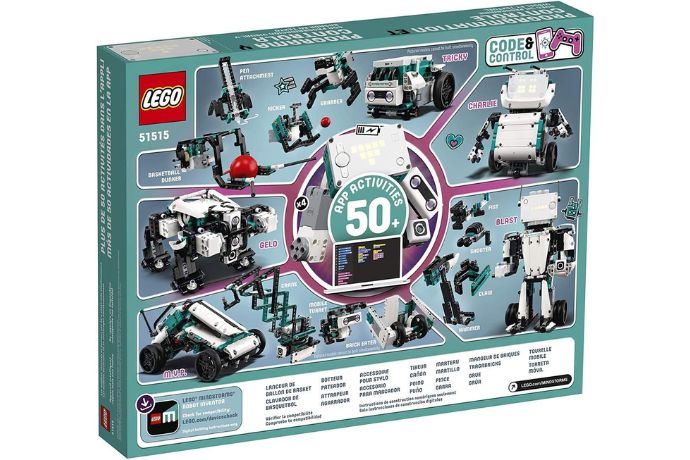
It’s hard to imagine a childhood without LEGO bricks scattered across the floor. LEGO has remained a household favorite for decades—and for good reason. The LEGO Education series elevates playtime into an immersive learning experience that promotes creativity, engineering, and problem-solving skills.
When kids build structures, vehicles, or even simple houses, they’re not just stacking plastic—they’re thinking like engineers. They learn about balance, geometry, and physics in a hands-on way. With themed kits such as LEGO Mindstorms or LEGO Spike Prime, kids can even dip their toes into robotics and coding, learning to bring their creations to life.
What makes LEGO truly timeless is its open-ended play. There are no fixed rules or limits—children can imagine, experiment, and create endlessly. And every mistake—like a tower collapsing—is just another opportunity to try a new design.
Moreover, LEGO’s educational sets are often used in classrooms to teach STEM (Science, Technology, Engineering, and Math) concepts interactively. It’s a brilliant mix of fun and foundational learning that grows with your child’s imagination.
2: Osmo Genius Starter Kit
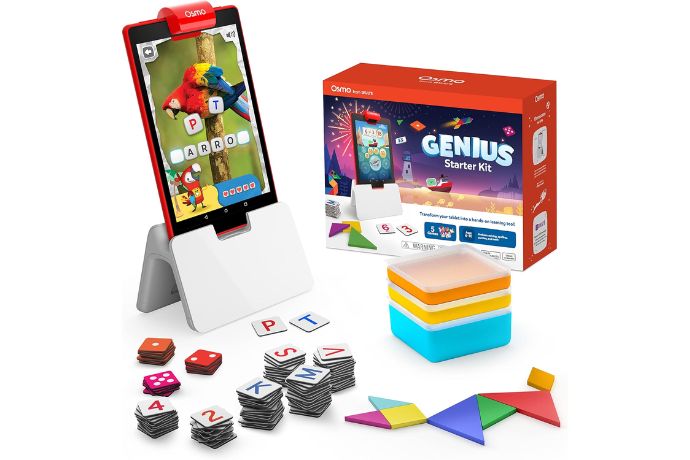
If your child loves screens, the Osmo Genius Starter Kit is the perfect way to turn that passion into a productive learning experience. Osmo combines physical play with digital interaction—bridging the gap between hands-on learning and technology.
The kit connects to an iPad or Fire tablet and includes games that teach math, spelling, and problem-solving in a fun and intuitive way. For instance, kids can draw shapes or solve puzzles on the table, and Osmo’s reflective AI camera recognizes their actions instantly on-screen.
Osmo stands out because it transforms screen time into interactive learning time. It encourages creativity, hand-eye coordination, and analytical thinking without overloading children with passive entertainment.
Parents love how Osmo adapts to different skill levels, making it perfect for both preschoolers and elementary kids. Whether they’re spelling words, solving tangrams, or drawing masterpieces, children stay deeply engaged—and that’s the secret sauce behind Osmo’s success.
3: Melissa & Doug Wooden Puzzles
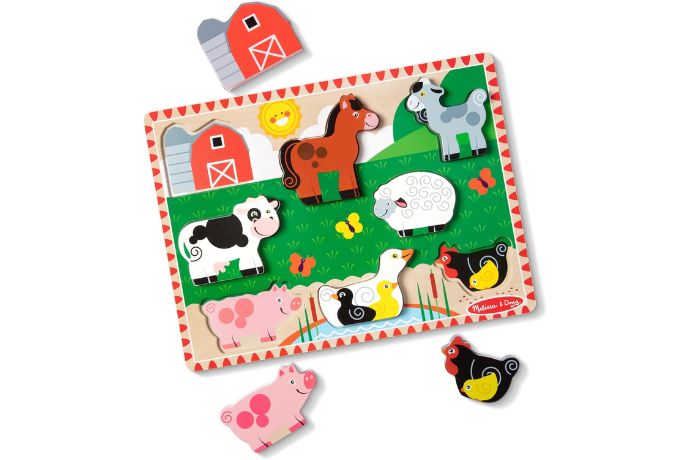
When it comes to quality educational toys for toddlers and preschoolers, Melissa & Doug reign supreme. Their wooden puzzles are simple, durable, and brilliantly designed to nurture early cognitive and motor skills.
Every puzzle piece invites little hands to grasp, twist, and fit—teaching coordination, patience, and problem-solving. The tactile experience of touching real wood also engages multiple senses, which is vital for young learners’ brain development.
Melissa & Doug puzzles go beyond shapes—they include alphabet puzzles, animal themes, vehicles, and more. These designs help children identify letters, numbers, and everyday objects while improving hand-eye coordination and memory retention.
What makes them truly special is the balance between simplicity and learning depth. A child might think they’re just having fun fitting animal pieces into their slots, but in reality, they’re mastering foundational skills for reading and logic.
Parents appreciate that these puzzles are free from harsh plastics and made to last for years. They’re proof that sometimes, the most effective educational toys are the simplest ones.
4: VTech Kidizoom Camera
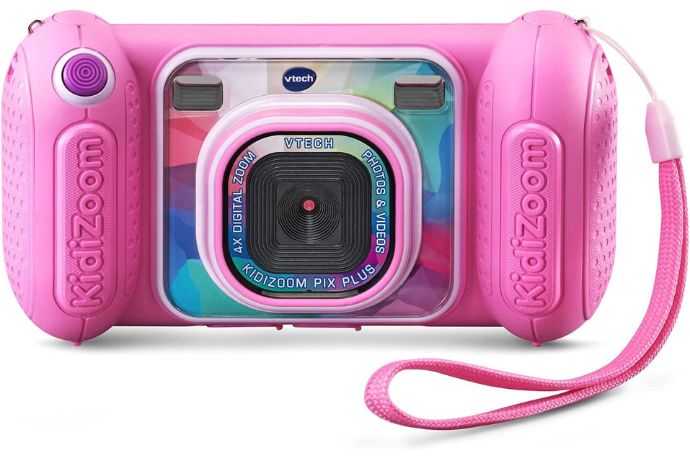
In an age where kids are surrounded by technology, the VTech Kidizoom Camera introduces them to digital literacy in a safe, creative way. This toy allows children to explore photography without the risks associated with expensive devices or internet exposure.
The camera is built tough for little hands—it’s shockproof, colorful, and easy to operate. Kids can take photos, record videos, and even play mini-games. But beneath all the fun, the learning is profound. They develop creativity, observation skills, and storytelling ability by capturing moments from their own perspective.
The Kidizoom Camera also encourages fine motor development as kids handle buttons, zoom features, and editing tools. It’s a fantastic toy for teaching children how to express themselves visually and explore the world through their own lens.
Plus, it builds confidence. Every photo becomes a story they’ve told themselves—teaching independence, imagination, and even basic digital skills that will come in handy later in life.
5: Magna-Tiles Building Sets
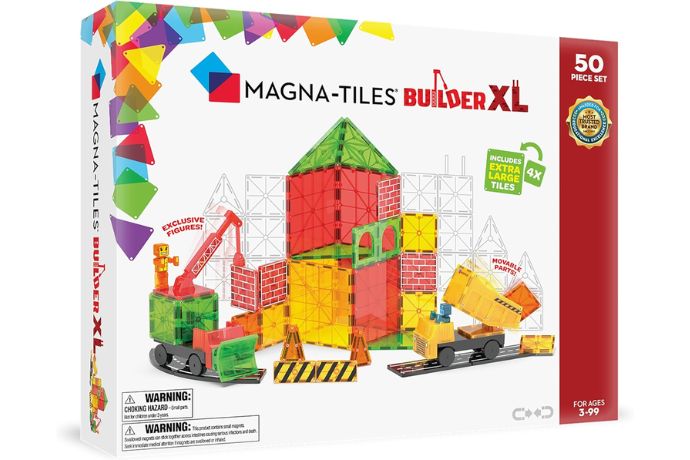
Few toys ignite imagination quite like Magna-Tiles. These vibrant, magnetic tiles allow children to create 2D and 3D structures while subtly introducing them to geometry, symmetry, and spatial reasoning.
Each tile snaps together effortlessly, giving instant gratification and endless possibilities. Kids can construct houses, rockets, castles, or abstract shapes—whatever their creativity inspires. The magnetic attraction not only simplifies building but also provides hands-on lessons in magnetism and structural balance.
Magna-Tiles are ideal for both solo and group play. When children build together, they naturally learn teamwork, communication, and problem-solving. The colorful transparency of the tiles adds an aesthetic touch that makes learning even more exciting.
These sets are particularly beneficial for preschoolers and early school-age kids because they encourage critical thinking through trial and error. There’s no right or wrong way to build—just endless exploration.
Whether at home or in the classroom, Magna-Tiles continue to inspire curiosity and creativity in kids of all ages.
6: Fisher-Price Think & Learn Code-a-Pillar

If you’ve ever wanted to introduce your little one to the world of coding without a screen, the Fisher-Price Think & Learn Code-a-Pillar is an incredible choice. Designed for toddlers and preschoolers, this adorable, segmented caterpillar teaches the fundamentals of coding, sequencing, and logic through physical play.
Each segment of the Code-a-Pillar represents a different command—such as moving forward, turning left, or pausing. By rearranging the pieces, kids can “program” their caterpillar to move in different directions. It’s hands-on, visual, and fun—perfect for young minds just beginning to understand cause and effect.
This toy builds early problem-solving and planning skills, encouraging children to experiment and learn from mistakes. When their caterpillar doesn’t reach its target, they try again, learning through trial and adjustment—a foundational concept in programming and critical thinking.
Parents love that it’s screen-free but still highly engaging. The colorful lights, fun sounds, and movement captivate kids while quietly introducing them to STEM learning principles. Plus, it promotes patience and perseverance—skills that go far beyond coding.
7: LeapFrog Learning Tablet
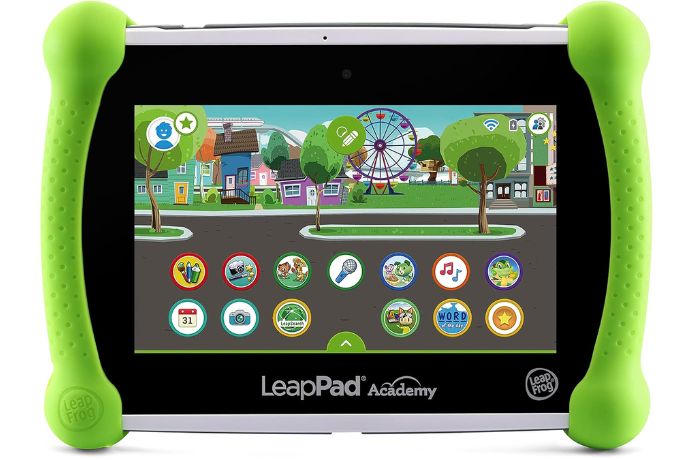
For tech-savvy kids, the LeapFrog Learning Tablet is like having a personal teacher that fits right in their backpack. This interactive tablet combines fun games, e-books, and educational videos that cover everything from math to language development.
What sets LeapFrog apart is its adaptive learning technology. It adjusts the difficulty based on a child’s skill level, ensuring the content remains challenging but not frustrating. It’s the perfect balance of fun and focused education, with parental controls to keep the experience safe and age-appropriate.
Kids can learn spelling, math, logic, science, and even art through interactive challenges. The games reward progress, encouraging kids to stay motivated and proud of their achievements.
For parents, LeapFrog offers peace of mind—it’s a screen time option that’s both entertaining and educational. Unlike typical tablets that can lead to passive consumption, LeapFrog’s design ensures kids stay active participants in their own learning journey.
With colorful visuals, friendly characters, and intuitive touch controls, the LeapFrog Learning Tablet turns everyday play into a classroom of discovery.
8: Smartivity STEM Construction Kits
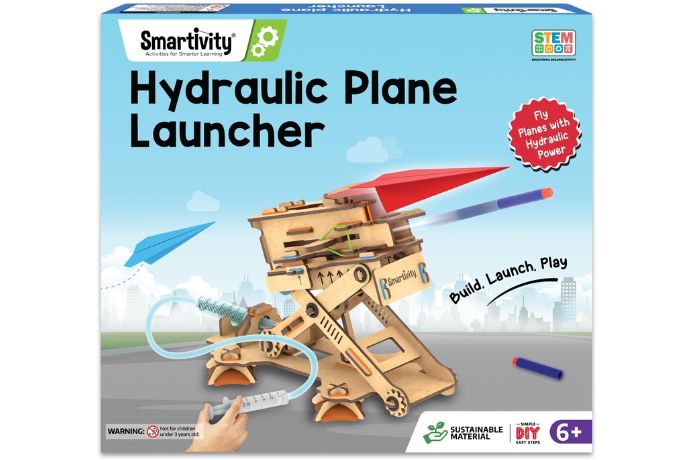
If your child loves to build, design, and tinker, Smartivity STEM Construction Kits are a game changer. These kits let kids construct working models of real-world mechanisms—like catapults, roller coasters, or musical instruments—using safe, eco-friendly materials such as wood.
The building process itself is an incredible learning experience. Kids follow step-by-step instructions to assemble each component, enhancing concentration, logic, and spatial reasoning. Once built, they can experiment with motion, balance, and physics to see how their creation works.
Smartivity kits are based on the STEM learning model (Science, Technology, Engineering, and Math), helping children connect playtime with real-world scientific principles. Whether it’s understanding how gears rotate or how gravity affects motion, every kit becomes a mini science lab.
These toys are great for independent or parent-assisted play. They foster curiosity, patience, and critical thinking—all while delivering a sense of pride and accomplishment when the final project comes to life.
And because Smartivity kits are reusable, the learning never ends. Kids can rebuild, modify, or customize their projects for new challenges each time.
9: Play-Doh Shape and Learn Kits
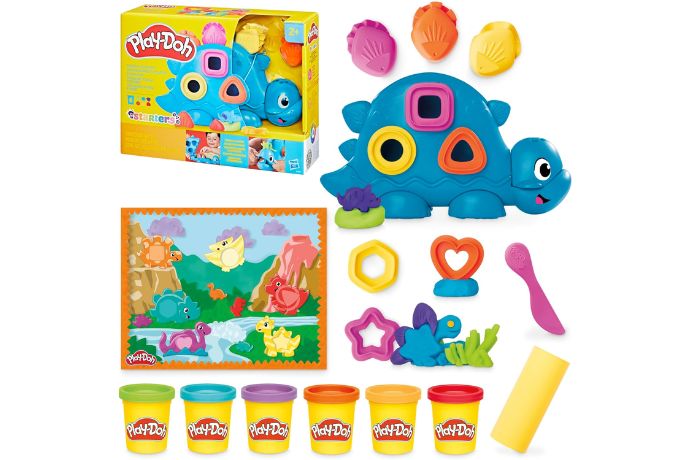
Ah, Play-Doh—a timeless favorite that never fails to spark creativity. The Play-Doh Shape and Learn Kits take this classic toy to the next level by integrating educational goals such as literacy, numeracy, and fine motor development.
Kids can shape letters, numbers, animals, or entire imaginative worlds. As they squish, roll, and mold the colorful dough, they develop hand strength and coordination, essential for writing and early learning.
The kits often include themed playmats and activity cards that guide parents and kids through interactive learning exercises. For example, one kit might focus on counting and sorting, while another teaches patterns, colors, and shapes.
Play-Doh’s sensory play is particularly beneficial for preschoolers, as it helps improve concentration and creativity while providing a calming outlet for energy and emotion. It’s also a great group activity—kids learn to share, collaborate, and express themselves together.
Plus, Play-Doh is safe, non-toxic, and endlessly reusable. Few toys have stood the test of time like Play-Doh—and the educational versions prove that learning and fun can be as simple as a handful of dough.
10: National Geographic Science Kits

If your child is a budding scientist or simply curious about how the world works, the National Geographic Science Kits are an absolute must-have. These kits transform ordinary science lessons into hands-on experiments and adventures that inspire awe and discovery.
Kids can grow real crystals, dig up fossils, build volcanoes, or even explore chemical reactions safely at home. Every kit is designed to combine fun, excitement, and education—making science come alive right before their eyes.
The experiments promote critical thinking, patience, and attention to detail while introducing key STEM concepts like chemistry, geology, and physics. Children don’t just read about science—they experience it.
National Geographic’s brand is synonymous with exploration, and these kits capture that same spirit of curiosity. Each experiment includes detailed guides, scientific facts, and explanations that encourage deeper understanding.
Parents love how these kits turn learning into family time. Whether you’re mixing solutions, excavating fossils, or observing crystals form overnight, you’re not just playing—you’re learning together.
11: Crayola Creativity Sets
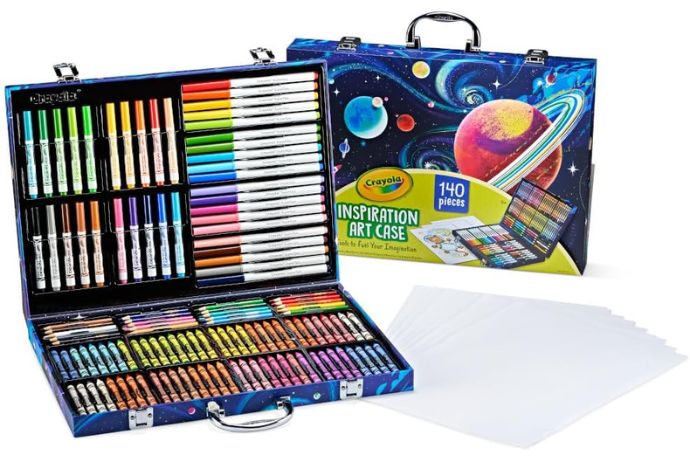
For children who love to color, paint, and design, Crayola Creativity Sets are the perfect tools for self-expression and artistic development. Crayola has been a leader in creative play for generations, and their kits now go beyond crayons—featuring markers, paints, modeling clay, and even digital drawing tablets.
Art is a vital part of child development. Through drawing and coloring, kids improve fine motor control, hand-eye coordination, and focus. More importantly, they learn to express emotions and ideas visually—a key part of emotional intelligence.
Crayola’s sets also introduce children to color theory, patterns, and design thinking. Whether they’re experimenting with watercolors or creating 3D clay figures, kids learn to visualize concepts and think outside the box.
The brand’s art sets are also known for being safe, washable, and durable—perfect for little hands and big imaginations.
In a world increasingly dominated by screens, Crayola brings back the magic of hands-on creativity—a reminder that sometimes, the simplest tools can unlock the biggest dreams.
12: Montessori Wooden Learning Boards
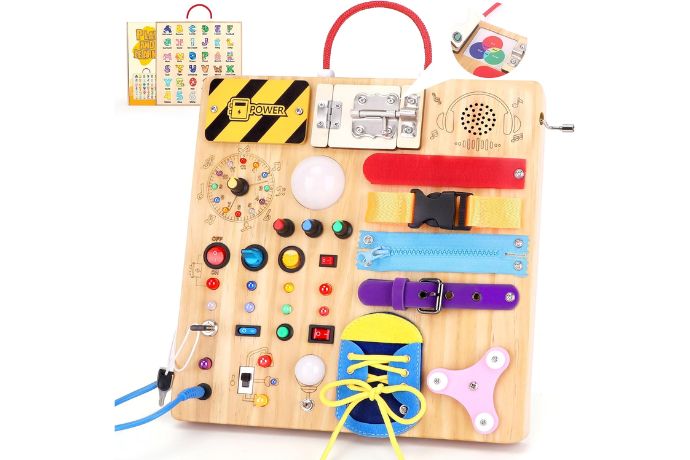
When it comes to toys that emphasize independence and hands-on discovery, Montessori wooden learning boards are second to none. Inspired by the Montessori method, these toys are designed to foster practical life skills, concentration, and sensory learning through simple yet purposeful activities.
Unlike flashy or overstimulating toys, Montessori learning boards focus on minimalism. Each board often includes latches, locks, buttons, zippers, and switches—all everyday mechanisms that help children practice fine motor control while building patience and focus.
These toys promote self-directed learning. Children explore at their own pace, figuring out how things work without constant adult guidance. This nurtures problem-solving, confidence, and independence—qualities that are invaluable beyond childhood.
Many Montessori boards also teach foundational concepts such as colors, numbers, letters, and shapes. Because they engage multiple senses—sight, touch, and even hearing—they help kids retain information more effectively.
Made from natural, eco-friendly wood, these toys are not only durable but also safe for young children. Their tactile texture adds warmth and authenticity that plastic toys can’t replicate.
The beauty of Montessori learning toys lies in their simplicity. They quietly empower children to think critically, explore creatively, and build real-world skills—one latch or zipper at a time.
13: ThinkFun Gravity Maze
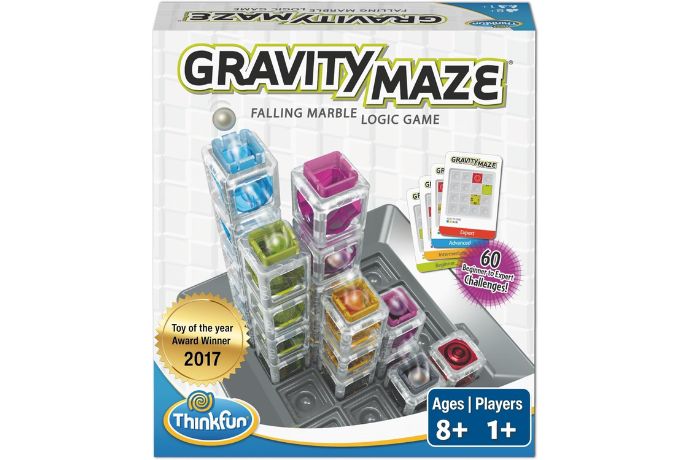
Part puzzle, part marble run, the ThinkFun Gravity Maze is an absolute brain workout disguised as entertainment. Designed for ages 8 and up, this educational toy teaches logic, spatial reasoning, and problem-solving through hands-on play.
The game includes colorful translucent towers, a grid, and challenge cards that range from beginner to expert levels. The goal is to build a path that guides a marble from the start position to the target tower using gravity alone. Sounds easy? Not quite—it requires critical thinking and a good dose of creativity.
Each challenge strengthens kids’ ability to plan ahead, test hypotheses, and make logical connections—core skills in STEM learning. What makes Gravity Maze special is its open-ended approach; kids can follow the cards or invent their own mazes for endless fun.
It’s also an excellent way for parents and children to bond through cooperative problem-solving. The tactile, interactive nature of the game makes it much more engaging than screen-based puzzles.
By blending fun and mental stimulation, ThinkFun Gravity Maze helps children develop persistence and analytical thinking while keeping boredom far, far away.
14: K’NEX Building Kits
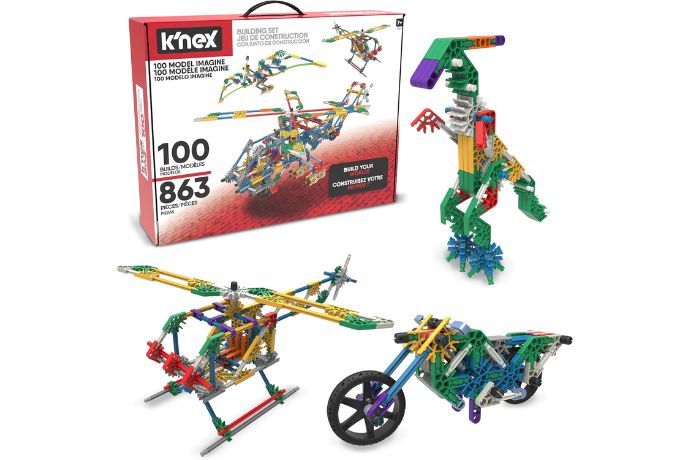
When it comes to engineering and construction play, K’NEX Building Kits stand tall as one of the best educational toy lines ever created. With a system of rods, connectors, gears, and wheels, K’NEX empowers kids to build everything from simple bridges to complex machines.
These kits teach fundamental engineering concepts such as structural balance, symmetry, and motion. Kids quickly grasp how shapes and angles contribute to strength and design as they bring their creations to life.
K’NEX kits also spark collaboration and teamwork when used in classrooms or family settings. Building large structures often requires communication, planning, and cooperation—skills that go beyond STEM and into real-world readiness.
Unlike many toys that limit creativity, K’NEX offers limitless possibilities. The open-ended play allows children to innovate, modify, and experiment, which helps develop persistence and problem-solving ability.
The sense of accomplishment after finishing a complex project is tremendous—it builds confidence and fuels curiosity to explore even bigger ideas. Whether it’s a working Ferris wheel or a racing car, K’NEX makes learning feel like pure adventure.
15: Toniebox Audio Player
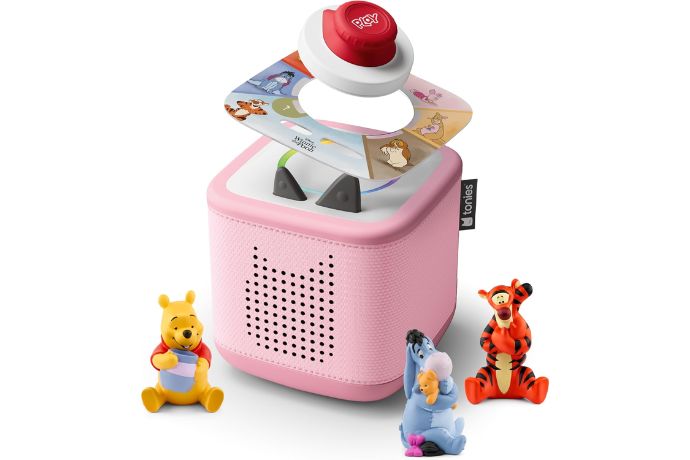
The Toniebox Audio Player is revolutionizing storytime by combining technology with imagination. Designed for kids ages 3 and up, it’s a screen-free audio system that lets children listen to stories, songs, and educational content by simply placing a “Tonie” character on top of the soft cube-shaped speaker.
Each Tonie figure contains preloaded content—ranging from fairy tales to educational lessons—and kids can even record their own stories using “Creative Tonies.” This unique approach encourages listening comprehension, language development, and creativity, while keeping children engaged without a screen.
The Toniebox is designed to be durable, portable, and safe for little hands. Its intuitive interface makes it easy for kids to control—no complicated buttons or menus. They can change stories by swapping figures, tap to skip, or squeeze the sides to adjust volume.
Parents love it because it promotes independent, calm play. Whether during quiet time, bedtime, or travel, it turns storytelling into a magical, interactive experience that inspires imagination.
In a world overflowing with visual distractions, the Toniebox brings back the lost art of listening, making it one of the most innovative educational toys of the decade.
Tips for Parents: Making the Most of Educational Play
Having the best educational toys is only half the equation—how you use them matters even more. Here are some practical tips to help parents turn playtime into meaningful learning time:
- Follow your child’s interests. If your child loves animals, pick toys that teach biology or nature. If they enjoy building, explore STEM construction kits. Interest-driven play fosters deeper engagement.
- Encourage open-ended play. Avoid micromanaging. Let your child experiment, make mistakes, and explore. This builds creativity and confidence.
- Create a learning-friendly space. Dedicate a small area in your home for educational play. Keep it organized, clutter-free, and inspiring.
- Play together. Kids learn by observing. When parents participate, play becomes collaborative and nurturing.
- Limit passive screen time. While digital learning can be beneficial, balance it with physical, hands-on toys that promote imagination and problem-solving.
- Rotate toys regularly. Introducing new toys or bringing back old favorites keeps curiosity alive and prevents boredom.
Remember: the goal isn’t to teach lessons but to make learning feel like play.
Related Articles
- Top Baby Gifts for First Christmas
- Best Wedding Guest Dresses for 2026 (By Season & Venue)
- 12 Essential Camping Gadgets You Didn’t Know You Needed
- Best Dog Beds for Large Breeds: 10 Top Picks & Buyer’s Guide
- Best Refrigerators for Thanksgiving Meal Prep: Top Picks for Large Families
- 25 Thoughtful Christmas Gift Ideas for Women
- Best Home Workout Equipment 2026: Top Picks for Every Budget and Space
Where to Buy the Best Educational Toys
Finding quality educational toys can be overwhelming with so many options out there. Here are some trusted places and tips to ensure you get the real deal:
- Official Brand Websites: Buy directly from brands like LEGO, LeapFrog, or Melissa & Doug to ensure authenticity.
- Major Retailers: Amazon, Target, and Walmart have wide selections but always check reviews and seller ratings.
- Specialty Toy Stores: Stores focused on educational play often curate the best learning tools for each age group.
- Eco-friendly Brands: If sustainability matters to you, explore brands like PlanToys or Hape for non-toxic, wooden learning toys.
- Look for Certifications: Ensure the toys meet safety standards (ASTM, CE, EN71).
Always read product descriptions carefully and verify age recommendations. A safe and high-quality toy not only enhances learning but also ensures long-lasting enjoyment.
The Future of Educational Toys
The future of play is bright—and smart. As technology evolves, educational toys are becoming more interactive, personalized, and eco-conscious. Artificial intelligence and augmented reality are already transforming how kids learn, offering immersive experiences that blend digital fun with real-world skill-building.
We’re also seeing a strong shift toward sustainable, biodegradable materials and toys that teach environmental awareness. The next generation of educational toys won’t just teach kids how to think—they’ll also teach them how to care for their planet.
Moreover, the line between play and education will continue to blur. From coding robots that grow with your child’s skills to AR storybooks that bring history to life, the possibilities are endless.
At the heart of it all, though, the goal remains the same: to make learning joyful, imaginative, and lifelong.
Conclusion: Learning Through Play—A Lifelong Gift
Educational toys do far more than keep children busy—they ignite curiosity, build confidence, and lay the foundation for lifelong learning. Whether your child is molding Play-Doh, building a LEGO robot, or listening to stories on a Toniebox, they’re developing essential cognitive, social, and emotional skills in the most natural way possible—through play.
The best educational toys don’t teach facts; they teach how to think, explore, and dream. And when learning feels like fun, every child has the power to become a creative thinker, a problem-solver, and a lifelong learner.
So next time you’re picking a toy, remember—you’re not just choosing entertainment; you’re investing in your child’s growth, imagination, and future.
FAQs
1. What age should kids start with educational toys?
Babies can start as early as six months with simple sensory toys. As they grow, introduce puzzles, building blocks, and STEM kits suited to their developmental level.
2. Are tech-based toys better than traditional ones?
Not necessarily. A balance between digital and hands-on toys works best. Traditional toys like puzzles or blocks encourage creativity, while tech-based ones can teach coding and logic.
3. How can I make playtime more educational?
Engage with your child during play—ask questions, explore possibilities, and let them lead the activity. Every toy can be educational when used thoughtfully.
4. What’s the difference between Montessori and regular toys?
Montessori toys emphasize independence, simplicity, and real-world learning, while regular toys often focus on entertainment or fantasy.
5. How often should I rotate my child’s toys?
Every few weeks! Rotating toys keeps playtime fresh and stimulates curiosity by reintroducing old favorites in new ways.